
PROJECT-BASED LEARNING IN PRIMARY STEM: FOSTERING CRITICAL THINKING AND COLLABORATION THROUGH REAL-WORLD ENVIRONMENTAL CHALLENGES
 Seychelles Seychelles Seychelles
Article Sidebar
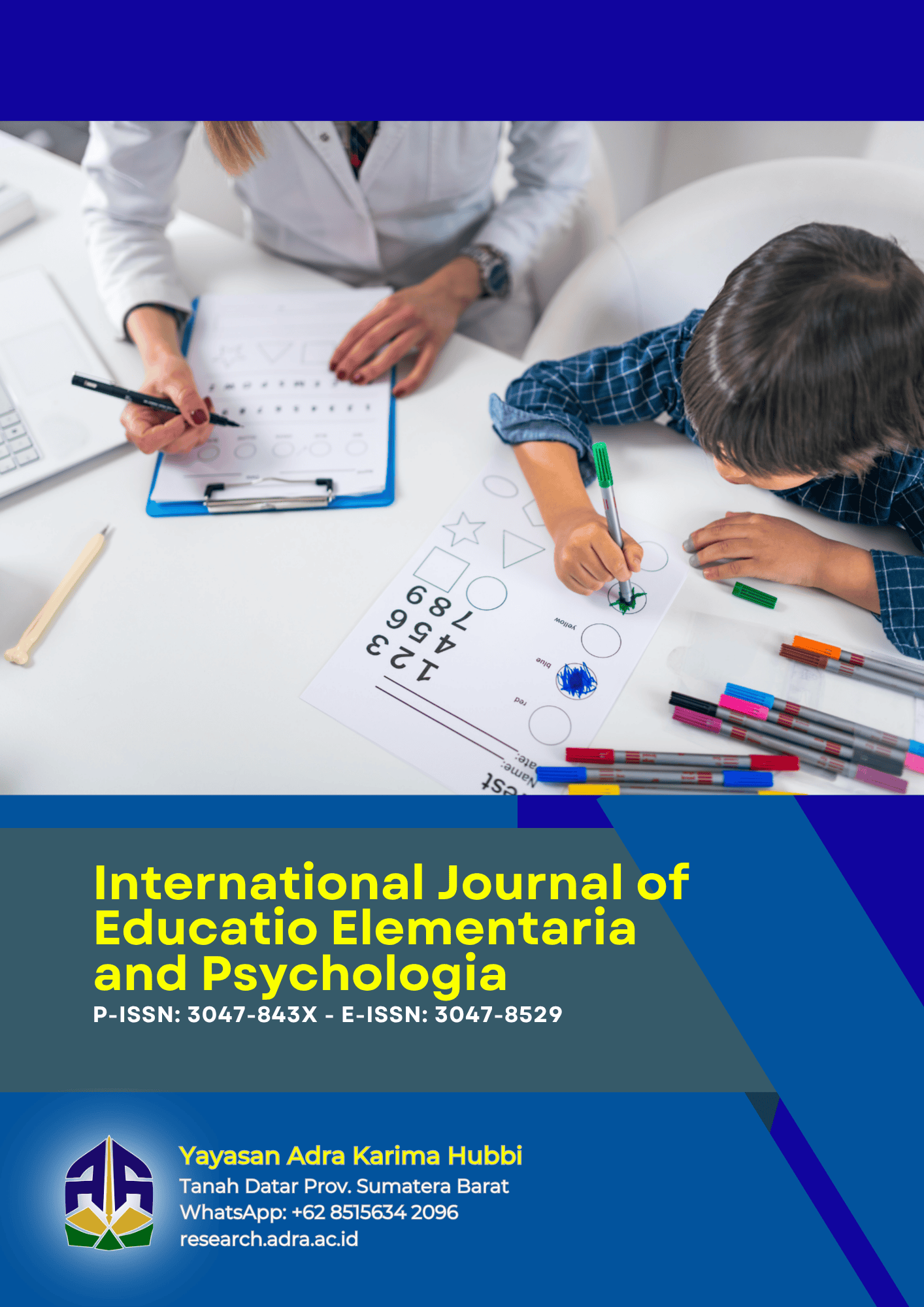
-
Collaboration, Critical Thinking, Environmental Challenges, Project-Based Learning, Primary STEM Education
Abstract
The integration of Project-Based Learning (PBL) into primary STEM education has gained attention as an effective approach for developing critical thinking and collaboration skills among young students. PBL offers an interactive, student-centered learning environment where students engage in real-world challenges, promoting deeper understanding and problem-solving skills. This study explores the impact of PBL on fostering critical thinking and collaboration through real-world environmental challenges in a primary school STEM context. The research aims to examine how PBL influences students’ ability to think critically about environmental issues and work collaboratively to propose sustainable solutions. A mixed-methods approach was employed, involving both quantitative assessments of critical thinking skills and qualitative data from observations and student reflections. The results show a significant improvement in students’ critical thinking abilities, with 85% of students demonstrating enhanced problem-solving skills. Collaboration skills also improved, with 90% of students reporting better teamwork and communication during the project. The study concludes that PBL is an effective pedagogical tool for enhancing both critical thinking and collaboration skills in primary STEM education. These findings suggest that real-world environmental challenges provide a meaningful context for students to engage in active learning, thereby improving their academic and social skills in STEM disciplines.
Full text article
References
Dahhan, H. (2025). Immersive Learning Experiences: How Augmented Reality and Virtual Reality are Shaping the Future of Radiology Education. Academic Radiology, 32(10), 5681–5683. https://doi.org/10.1016/j.acra.2024.08.033
Evangelista, A. (2025). From knowledge to action: Assessing the effectiveness of immersive virtual reality training on safety behaviors in confined spaces using the Kirkpatrick model. Safety Science, 181(Query date: 2026-01-04 12:38:34). https://doi.org/10.1016/j.ssci.2024.106693
Girondini, M. (2025). Human bodies in virtual worlds: A systematic review of implicit sense of agency and ownership measured in immersive virtual reality environments. Frontiers in Human Neuroscience, 19(Query date: 2026-01-04 12:38:34). https://doi.org/10.3389/fnhum.2025.1553574
Hung, L. (2025). Facilitators, barriers, and impacts to implementing dementia care training for staff in long-term care settings by using fully immersive virtual reality: A scoping review. Frontiers in Virtual Reality, 6(Query date: 2026-01-04 12:38:34). https://doi.org/10.3389/frvir.2025.1552370
Hussein, S. M. (2025). Facial Anatomy Teaching for Aesthetic Surgery: Using 3-dimensional Photogrammetry and Immersive Virtual Reality. Plastic and Reconstructive Surgery Global Open, 13(7). https://doi.org/10.1097/GOX.0000000000006972
Kim, J. (2025). Immersive Interaction for Inclusive Virtual Reality Navigation: Enhancing Accessibility for Socially Underprivileged Users. Electronics Switzerland, 14(5). https://doi.org/10.3390/electronics14051046
Lavoie, P. (2025). Immersive and nonimmersive virtual reality: A quasi-experimental study in undergraduate nursing education. Clinical Simulation in Nursing, 99(Query date: 2026-01-04 12:38:34). https://doi.org/10.1016/j.ecns.2024.101682
Odame-Amoabeng, S. (2025). Immersive insights: A qualitative systematic review and thematic synthesis of views, experiences, health and wellbeing of students and educators using virtual reality in nursing and midwifery education. Nurse Education Today, 150(Query date: 2026-01-04 12:38:34). https://doi.org/10.1016/j.nedt.2025.106679
Schleußinger, M. (2025). Immersive information seeking–A scoping review of information seeking in virtual reality environments. Journal of Information Science, 51(6), 1471–1488. https://doi.org/10.1177/01655515231174384
Smith, A. (2025). Harnessing the therapeutic effects of nature for chronic Pain: A role for immersive virtual reality? A narrative review. European Journal of Pain, 29(2). https://doi.org/10.1002/ejp.4727
Sudhakaran, G. M. (2025). Feeling the Earthship house: Eliciting a perspective of posterity through immersive virtual reality. Smart and Sustainable Built Environment, 14(4), 960–991. https://doi.org/10.1108/SASBE-05-2023-0122
Wang, N. (2025). Identifying key factors influencing immersive experiences in virtual reality enhanced museums. Scientific Reports, 15(1). https://doi.org/10.1038/s41598-025-15628-y
Zhang, L. (2025). Immersive Interaction Design in Tourism and Leisure Experience Using Virtual Reality Technology. Advances in Transdisciplinary Engineering, 66(Query date: 2026-01-04 12:38:34), 334–339. https://doi.org/10.3233/ATDE241376
Zhang, Q. (2025). Immersive AI-Powered Language Learning Experience in Virtual Reality: A Gamified Environment for Japanese Learning. Proceedings 2025 IEEE Conference on Virtual Reality and 3D User Interfaces Abstracts and Workshops Vrw 2025, Query date: 2026-01-04 12:38:34, 1620–1621. https://doi.org/10.1109/VRW66409.2025.00455
Zhao, K. (2025). Immersive Biography: Supporting Intercultural Empathy and Understanding for Displaced Cultural Objects in Virtual Reality. Conference on Human Factors in Computing Systems Proceedings, Query date: 2026-01-04 12:38:34. https://doi.org/10.1145/3706598.3714303
Authors
Copyright (c) 2025 Alain Morel, Marie Ange Lablache, Richard Padayachy

This work is licensed under a Creative Commons Attribution-ShareAlike 4.0 International License.



